.
Showing posts with label Gattaca. Show all posts

Friday, December 23, 2011

'Gattaca' Semiotics


Semiotics:
Vincent’s dreams to go to space are symbolic of his high aspiration,
-a metaphor showing his desire to ignore the limit society has given him, the sky is not his limit (in contrast with the saying).
- Stars are a global symbol of wishes or dreams.

motif of identification and being categorised.
- a catalyst of much of the film’s tension,
- serves to emphasise this society’s aim to remove individualism.

The advanced scientific technology (for Vincent to hide his true identity) is not so far removed from that available today that the words from the beginning of the film “In a not too distant future” ring true and the audience’s disbelief is suspended.

Futuristic conventions: - the technology
- the clean and clinical looking environments 
- remind the audience of a science lab implying that the whole world is now scientifically focussed.
Jerome’s silver medal is symbolic of his perceived short-comings and of the world that made him feel that way.
It is significant therefore that in the final image of Jerome he reclaims the medal as a possession of pride and it is the last thing the audience is shown of him.
There is also a motif of light and dark :
- hints at secrecy and mystery.
- brighter, naturally lit scenes are generally those in which Irene and Vincent connect.
Action Sequences: As a thriller tension and mystery are generally substitutes for actual action.
The only really violent scene, the murder of Gattaca’s mission director, is not shown on screen. In one scene Victor attacks a policeman in order to escape. This is in contrast with his almost continuous composure in ‘public’ and is therefore all the more surprising.

Friday, October 7, 2011

'Gattaca' Costume and Type-casting

Costume:

In the beginning Vincent is seen in casual clothing, slightly scruffy but that never the less mark him out as studious, possibly even geeky as his physically weaker stature also conforms with this stereotype. Once he leaves the relative comfort and safety of his home Vincent loses even this stereotype and identity becoming merely a generic worker, wearing a grey and black jumpsuit, in the eyes of society. His glasses are symbolic of his perceived invalidity. After Vincent takes on Jerome’s identity he dresses in dark colours, usually black, and styled suits, with hair slicked back, in order to present himself as one of Gattaca’s elite. His physical transformation highlights the superficial prejudice of society and highlights that underneath the genes everyone has the same potential. His smart, crisp uniform despite the futuristic diegesis of the narrative is surprisingly traditional and similar to dress clothes today. However the regularity that he wears this smart attire is surprising.
Type Casting: Jerome, Vincent and Anton all have brown hair which is slicked back (except when Vincent isn’t in his role as a ‘borrowed ladder’). This conformity in the casting is to show the reduced individuality of the characters and to allow the audience to see the possibility of their interchangeable identities. Their chiselled features, without facial hair, impress the society’s desire for perfection and to highlight the attractiveness of the actors is also a hook for a female audience. 
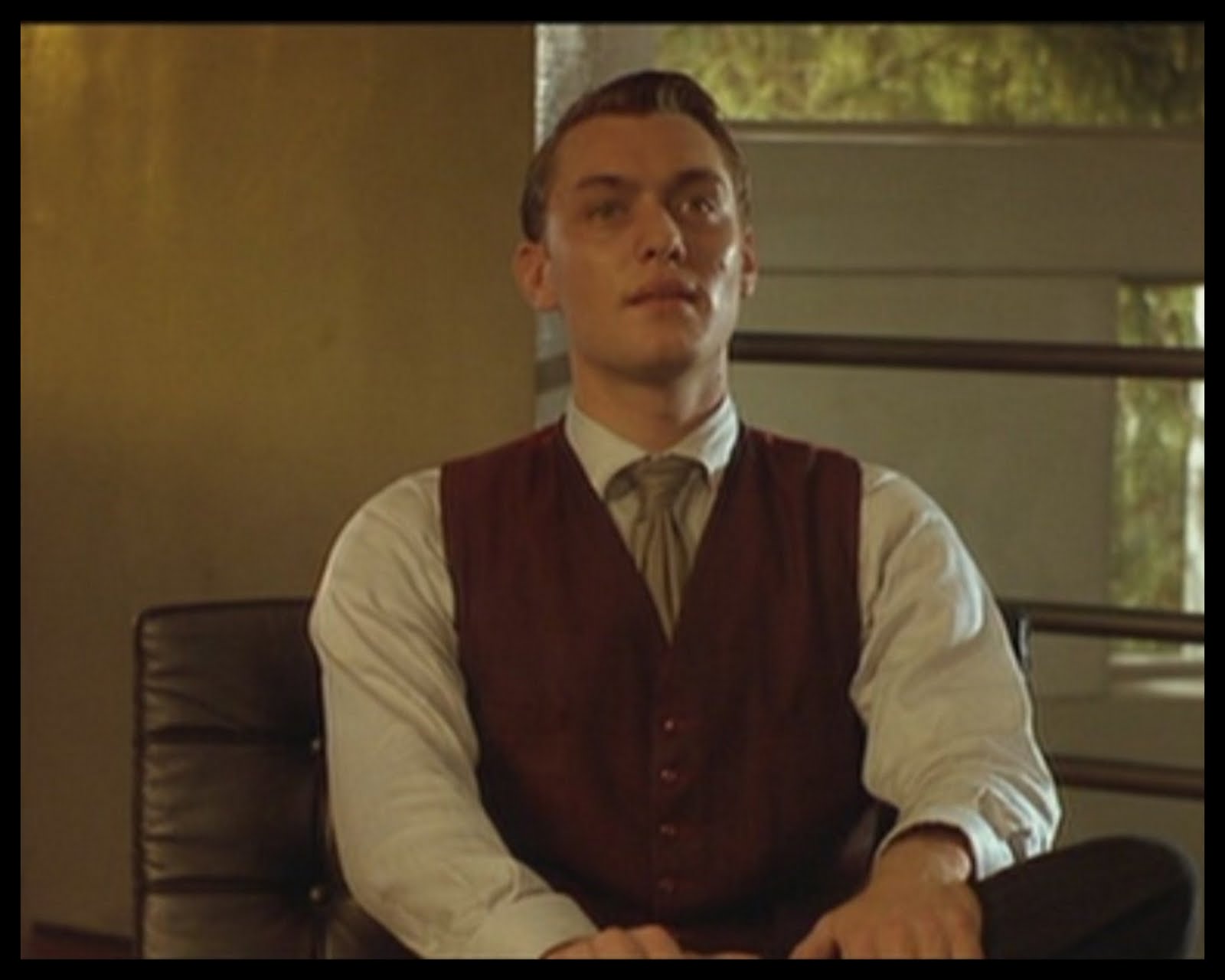
Jerome is wheelchair-bound after an ‘accident’ and this is silver and black with no additions to it. Jerome was born as one of the elite and assumes a position of superiority and authority. His dress code matches these feeling as he is always well turned out in a suit styled outfit, shirt, tie and waistcoat with dark trousers and shiny shoes. Although, like the other characters, he is often in darker clothes (particularly dependent on his mood) he is the only character to be seen wearing a bright colour. Whether this is ironic as he is one of the most depressed characters of the film is unknown.

Irene wears the same formal styling of outfit as Vincent. It is black and white and decent, although she wears it with sophistication and its tailoring affords to show her figure highlighting her desirability. Most of her clothes have an air of formality even her all black athletics clothing and elegant black dinner dress. Her gold dress is the first time she breaks free of some unspoken formal clothing code and by having her hair down the idea that she is breaking with normality is accentuated. The richness of the colour gold is often symbolic of something precious and Irene’s role as a love interest would align her with that idea. 
Type Casting: Blonde hair is often associated either with beauty, being angelic or with stupidity. In this film Irene’s blonde hair and blue eyes could be a nod to the Nazi view of the perfection of the Aryan race in order to align the oppressive government with this infamous political party so that the audience will subconsciously understand the threat that this antagonist poses within the film. Uma Thurman also has an angular face and is often considered an interesting beauty. Her model-like looks would show the audience from the beginning that she too was a designer baby – made to be the best in every way.

'Gattaca'

‘Gattaca’ is a dystopian future Sci-Fi which has honed in on the contemporary issue of ‘designer babies’ and the modern obsession with altering our genes, and projected the concept into an oppressive, extreme environment for contemplation of the morality of these investigations. Potential children are selected through pre-implantation genetic diagnosis to ensure they possess the best hereditary traits of their parents. These children are considered ‘Valid’, whereas naturally conceived children, ‘God children’ are ‘In-Valid’ thereby a genetic hierarchy is created. ‘In-Valids' are considered to be educationally dysfunctional, aggressive and susceptible to disease giving them a shorter predicted life. The politically correct government has made genetic discrimination illegal but practice is not punished and the ‘In-Valids’ are relegated to menial jobs.
The Title: Refers to the astronomical society, like NASA, in charge of exploration trips into space and analysis of the Universe. However, the name of the film is created to imply a core theme of the narrative: DNA. The letters G, A, T, C, the base letters of the title, are the initial letters of the four complementary nitrogenous bases on DNA. This highlights the film’s (and the character’s) focus and interest in this scientific level of being human.
Tagline: The inspirational tagline “There is no gene for the human spirit” refers to the protagonist as he strives t rid himself of the restrictions of being an ‘In-Valid’. This play on words is to highlight that in this imagined society differences are considered disabilities (‘invalid’). The films main aim, then, is to convey that there are intangible parts of our being and existence that science cannot explain or dictate.
Characters:

The protagonist Vincent Freeman (Ethan Hawke)is followed from the moment of his conception and introduces himself and his inner-most thoughts via a voice over. His surname proves to be ironic, as he is far from free –trapped inside his own genetic information. He is, on the whole, discriminated against for being imperfect. His tenacity and courage drive the narrative as he single-mindedly pursues his dream – of becoming an astronaut.

 Irene Cassini (Uma Thurman) is the love interest of the film yet also serves as a character to represent the middle ground. She was designed to be perfect and yet she was not. She is a mistake in the science, allowed to work at Gattaca but not allowed to progress into space. She acts as a reflection of Vincent’s views on society (there is a scenario which is repeated but reversed between them and they both make the same choice).

Jerome Eugene Morrow (Jude Law) is almost a mentor character but doesn't fully fulfil the stereotype, instead he and Vincent give each other what they both want (Vincent –Jerome’s perfect identity/ Jerome – Vincent’s dreams). Jerome is a tragic hero, another victim of society. He suffers from the burden of perfection; because of it he should have been the best but was crushed by only achieving a silver medal at swimming.  He is battling internal problems which are symptoms of the wider social issue.
The antagonist is the society and its demand for perfection and its prejudice against those who are not. Anton Freeman (Loren Dean), Vincent’s estranged and genetically superior brother represents this and voices the antagonist’s side of the argument. This highlights how indoctrinated the characters are to view difference as negative.  However, it is also a crucial point that by the end the brothers look very similar implying that rather than being conflicting forces they are two sides of a coin. Vincent is physically defective but is determined and spirited. Anton is physical perfection but lacks the conviction and drive of his brother. The motif of their swimming game of chicken pits these qualities against each other and eventually victory is that of “the human spirit”.

'Gattaca' Key Shots

[4] The fingerprinting method of certifying someone’s identity is used as the only form of interview for the aspirational/elite jobs and also as a security system to allow a person access inside Gattaca. This highlights the use of technologies as methods of control, tracking and dividing the citizens.
Generic lines of workers from a high angle create an imposing sense of being watched and again reduced an individuality of the people. 
Identification frequently appears throughout the film (often wavering after Vincent’s test to increase the tension). The words VALID/INVALID are bigger than even the person’s name. This shows a loss of identity beyond that of the characters genes. It also highlights an undercurrent of judgement by the higher powers, whether someone properly belongs to the society or not.
[3] There are lots of close ups of the protagonists face throughout the film allowing the audience a secret insight into his thoughts and feeling that are not disclosed through dialogue or voiceover. Often the protagonist’s tension or fear of discovery heightens the audience’s similar emotions. The close ups allow increased empathy on the part of the viewer.

'Gattaca' Trailer Deconstruction

Gattaca’s trailer (a 2min 26 theatrical trailer/ no teaser available) begins with a montage of News reports and relative imagery all on reproductive technologies. These 17 seconds act to bring the audience from the present day into the social future of the film. It aims to set up the plot premise. These ideas of technology extremism tampering with something as natural as childbirth plays on audience fear and highlight the existence of these technologies already within our society, creating realism and belief in the film.
There are blue tinted close cut shots of a reporter figure that speaks and stares intensely in the direction of the audience. The trailer begins with one clear sentence (“Genetics. What does it mean?”)after which numerous voices are over-layed and echoing. This footage is inter-spliced with news articles (with close ups on keywords or phrases, chemical diagrams, biology videos of fertilisation and blood tests, shots of laboratories, DNA coding and babies (an extreme close up with focus on the eyes). There is fast pace editing throughout this sequence which gets faster using sideswipe and fade transitions.  The sequences builds to a climax and with a sound bridge, a crashing noise, it cuts to white. 
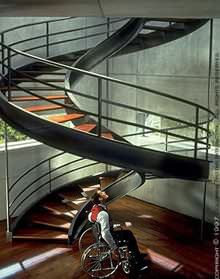
What follows is a low angle establishing tilt of white curved staircases introducing a sense of minimalism which is often associated with representations of the future. A voice over begins and speaks over key moments in the trailer to establish the complex narrative. Key phrases such as “genetic engineering”, “not too distant future”, “what you capable of achieving”, “success determined by science”, “divided by the standards of perfection”, “only chance” and “borrowing someone else’s” identify the key themes and plot.

Short clips of science research and laboratories are prevalent throughout, as is the motif of identification. Close ups on blood drops, hair, saliva tests, fingerprinting and Gattaca’s ID database show the significance of genetic clarification and allocation within a genetic hierarchy. A motif running through the trailer is the recurring image of the blue ID screen identifying the individual (the protagonist) as VALID or INVALID to highlight his dual identity and evasion of prejudice in order to attain his dream. The shot where a newly born baby is tested for disease and predicted life expectancy is shocking and raises strong emotions in the audience, not least sympathy for the protagonist.
Physical aptitude test shots like that of the anti-gravity test ball, swimming, pull ups and running machines show a focus of physical prowess which is contrasted with the protagonist who is seen for the first time briefly at 31 seconds.
Romance theme is introduced halfway through the trailer by showing shots of the protagonist and Irene alone together in various places as well as revealing the kiss scene.
Numerous shots of cleaning, scanning and the protagonist’s stringent washing pattern synchronous with the phrase “Any cell from any part of your body can betray you…” creates tension and impresses the difficulty of the protagonists challenge. Also heightening the tension is the argument between the protagonist and his friend which further explores the narrative premise and highlights the characters’ fears, “They will recognise me” is a line of shouted dialogue.
Action and conflict shots increase the pace of the trailer towards the end of the trailer. The protagonist punching a police officer/guard, running down a darkened side street, yelling in pain, the friend dragging himself up the stairs, a Detective investigating, doors slamming and the last shout is of the protagonist’s brother yelling his name. These shots are used to build the momentum of the trailer and give a sense powerful main conflict within the plot. The shots are short enough, though, to not give too much away.
The trailer fades in an image of the protagonist as he looks up in a reactive shot and the actors name [Ethan Hawke], followed by a similar image of Uma Thurman. The actor’s names are used to add gravitas to the film as they are fairly well known.
The title board fades in from black with a split screen image of half a magnified, blue tinted cell and a red/orange image of Saturn. These pictures together create a full circle and yet are opposites both is actual size and meaning within the film. The white title fades in over this image and the voice speaks directly to the audience “Welcome to Gattaca” inviting them further into the world of the film. The screen cuts to black again to show the tagline “There is no gene for the human spirit” which sums up the ambience and message of the film.

'Gattaca' Webpage Deconstruction

The webpage loads with a half planet, half cell as a counter. This is the ‘Gattaca’ (film) logo and represents both the obstacle and aim of our protagonist in conflict yet united in a circle as a potential metaphor for the narrative. The effect is to imply a futuristic, space feel to the site and when the site is loaded the black around the edge makes the picture the focus.
The cold blue, darkening towards the bottom left, and lots of hard lines make up the background. Again this has a stereotypically futuristic quality as the representation of the future in this film is an era of scientific and technological emphasis. The three main characters are in the mid ground of the picture and are attributed positions in correlation with their importance within the film eg. The protagonist is central, the friend is on the right and behind (right hand man) and the love interest on the left, also behind. The use of layers is to create depth within the image created. A metallic grey double helix runs along the bottom, in the foreground, and holds interesting stills from the film to pique the interest of the viewer.
The Typography on the site is the same metallic grey of the helix, with angular lines and a shadow to create a slightly 3D effect. The background image changes for some of the options at one point becoming the image on the DVD front cover.
The main point of the website is to advertise the rerelease of the DVD (now on Blu-ray too, showing that the producer is keeping the film as current as possible to appeal to the widest range of audience as possible).
There isn’t much interactivity except for the 5 options on the left side, which move with the cursor, they are Buy, Clips (including the trailer), About and Special Features. The site offers extra information and experiences for fans of the films. Along the bottom in the black border are the film acknowledgements as seen on posters. The actors are also credited top left above the title.

'Gattaca' Poster Deconstruction:

Although there are many different versions of film posters for ‘Gattaca’ this poster best highlights the Sci-fi genre through the use of the biologically accurate photo of a cell. This highlights a key plot theme of scientific development and creates realism, suspending the audience’s disbelief.
The extreme close up on the face draws the focus to the eyes, often considered the windows to the soul –something which is intangible and without biological explanation and therefore an idea which is in conflict with the image below. This idea is a mirror of the film’s narrative. The white background, cut closely around the face and in between the two pictures are symbolic of jail bars which is further connoted by the dual interpretation of the word “cell”.
The protagonist’s expression appears determined and serious; his eyes stare challengingly out of the poster engaging with the viewer. The play with contrasting light and dark across the sides of his face suggest a dual identity or dark secret.
The darkness also reduces the detail within the photo thereby increasing the characters mystery as does the use of blue colouring. Blue is usually symbolic of tranquillity and perhaps this aim of this poster is to subvert this idea.
Blue can also come across as a cold, mechanical colour and in this incidence be indicative of the technology of the dystopian future. This poster has many levels of potential meaning, for this reason it is possible that the poster is aimed at a more intellectual consumer, but overall it teases the viewer enough to make them curious to see the film.