.
Showing posts with label Theory. Show all posts

Thursday, February 23, 2012

Other Media Theory Applications

Theory of Semiotics
One of the original theorists of semiotics Ferdinand de Saussure created the concept of signifiers within texts which suggest at other meanings and indications behind signs and symbols. It creates a deeper underlying meaning based on the audience's perception of that object.
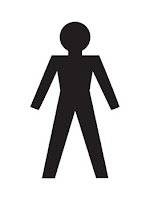
Signs used can be split into the following categories:

  • ICONIC - literal meaning of the object e.g. an image of a man means the men's toilets
  • SYMBOLIC - arbitrary meaning unrelated to what it is representing, but which is learnt and denotes a certain meaning e.g. chemical signs
  • INDEXICAL - an indication of a meaning e.g. chess pieces in Tinker Tailor Soldier Spy indicate that the narrative is a game. To read more click here.
Our rebel symbol is a symbolic sign of anarchy and the fight for freedom of speech. To read more on our symbol research click here. 


Theory of Audience
Appealing to a target audience is central to the creation of any media text. Audience demographic can be split up into six main sections: Age, gender, family, money, sexuality and education. We believe our target audience are between the ages of 18-30, are male, interested in thriller books and movies, are middle class, and are educated to a higher level.
We are appealing to a niche audience due to the high brow content of our trailer. Audience theory also states that media has a preferred reading where the audience recieves the media in the intended way. Adherrant decoding is where the audience reads the text in the incorrect way, but not neccesarily with a negative effect. In this way our text may be recieved positvely by a female audience to the same extent as male reception, for example.

Hyperdermic Needle Effect (1930s)
The Hyperdermic Needle Theory assumes that an audience will passively recieve any message presented to them and this message immediatly effects them. It states that the public cannot escape from the media's influence and vulnerable to it in this way. In this way, it believes that media is an invasive force in our lives. To some extent this applies to the presentation of our trailer, as the message we present is the importance of freedom of speech and we would hope this would affect our audience. It also applies to our narrative, where the media the government presents is recieved and accepted by a majorly passive audience (excluding the rebel force).

Uses and Gratification Theory (1974)
Uses and Gratification Theory attempts to define why audiences seek out particular media content. It states that people will attempt to find media that will meet their needs and also enchance their knowledge, improve personal relationships and a knowledge of personal indentity but also provide escapism or catharsis. It, as a contrast to Hyperdermic Needle Effect, assumes that the audience has an active role in how they use and intepret media.
The theory applies to our trailer as one of the aims of our genre is to provide escapism through a alien or parallel society. The audience would experience the action of the film and catharsis would be acheived because the action and emotion of the film would provide cleansing. It might also effect personal identity in the audience's own perception of goverment control and the need for freedom of speech and mass media.

To read our evaluation question on audience, click here.

Wednesday, November 9, 2011

Social Stage Theory

“Social stage is the point to which the society of your hero has developed.” All societies evolve through distinct social stages and these influence the type of narrative seen within them. Each social stage becomes synonymous with a particular type of hero, a unique breed of opponent, special concerns and particular values that shape a plot. The significance of location design and placement is that it is indicative of character type and audience expectation.
Social stage can be used as an extended metaphor to examine humanity or to create a physical representation of how a person would deal with an internal problem eg. moral problems, as narratives generally have two antagonists –one internal (psychological) and one external (a person or problem).
Social stage is as much about relationships and making connections as it is about environment. Relationships powerfully shape the story and determine how a character will grow and develop. The family is a great power structure to explore and by emulating the hierarchy quality of a family into the society a story can provide a deeper connection between the protagonist and the society.
Raindance Film School teach that there are 4 key stages through which a civilisation would develop over time. (Obviously these can only be loosely applied and there are many exceptions to the stereotypes.)
1)      Wilderness and super-hero:
Ø  No buildings
Ø  Hero travels alone or with a band of followers (this setting lends itself to religious narratives)
Ø  Nature is vast and all-powerful
Ø  The protagonist ascends to the role of ‘Superhero’ because they are the only ones capable of surviving (They are always male)
Ø  ‘Barbarians’ are the antagonists and the main concern of the protagonist is to survive
Ø  Ending: the superhero leaves his group at the foot of a mountain (metaphor for the main problem) and ascends alone where he receives ‘divine gift’ which he will then share
2)      Village and the classic hero:
Ø  A village is a small settlement – all the buildings look the same and are one storey. Often fences and buildings will be under construction or in disrepair symbolising the broken barrier between barbarianism and civilisation.
Ø  There will be a simple social structure (young and developing) without hierarchy although one character will assume the voice of the whole village when talking to an outsider.
Ø  The village is surrounded by wilderness and is exposed to the forces of nature and the villagers are prone to attack. Villagers mistrust anything to do with the wilderness or anyone who is different from them.
Ø  The ‘Classic hero’ is almost exclusively male and either comes or is summoned from outside the village. Sometimes he is initially mistaken for the villain; however, he is their only hope for defeating the antagonist. The classic hero will have some useful talent that will save the fragile community that “cannot physically or morally handle themselves”.
Ø  Although the village will change during the plot, the protagonist remains the same in character during the film.
Ø  Warring between the protagonist and village characters in some cases reveals their wickedness and corruption. After the problem is dealt with the protagonist no longer has a place in the village society and leaves.
Westerns fit this structure but the example we have given below is ‘Sleepy Hollow’.
                                                                         Image [Left] , Image [Right]

3)      City and the average hero:
Ø  This is a developed village which, upon meeting a physical boundary, must begin to grow vertically. The city is a place of “hierarchy, rank, privilege and vast differences in wealth and power.”
Ø  The ‘Average hero’ is an everyman/woman –completely ordinary.
Ø  The pursuit of the average hero is often a nesting instinct to build/protect his/her home or family. They are concerned with equality and justice and avoiding “the slavery of bureaucracy and government”.
Image [Left] , Image [Right]

4)      Oppressive City and the anti-hero:
Ø  A city grows so dense, so technological and bureaucratic that it becomes a place of enslavement. Often the intention of those in power is to create a utopian society which in reality isn’t realised or becomes corrupted.
Ø  There is a large distinction between social classes –with large numbers of those who have little wealth or power and just a few with most of it.
Ø  An ‘Anti-hero’ can have 2 distinct traits. (1) a person who will not be “beaten down by the oppressive city” and is therefore exiled/witnesses a crime and then holds the key to keeping someone in power. This results in this citizen being pursued, often until death. eg. Blade Runner. Or (2) a person who is beaten down – incompetent or unsocial and comes to realise that his/her society is flawed.
Ø  The next development of society is for it to crumble, sometimes from its own corruption, other times from an uprising or rebellion –physically or through thought/awareness. Then this social stage completes its cyclical evolution and returns to a Wilderness state eg. Lord of the Flies.
The general trend is that as the social stage gets bigger the individual hero gets smaller (and often less powerful). Oppressed and futuristic often seem to be depicted hand in hand, often because people assume that our society of today is in the ‘City’ stage of development. However, by examining recent News and modern institutions it could be concluded that modern civilisation resembles many aspects of an ‘Oppressed City’ (although not to the extremes depicted in film.)
Below the example is ‘Nineteen Eighty-Four’.
Image [Left] , Image [Right]

We have decide that our narrative landscape is that of an ‘Oppressed City’ due to the dystopian features of our basic plot. We investigated the portrayal of cities further.
Conventions of portraying a cityscape in narrative:
Ø  Mirror or distort aspects of a city to fit the narrative.
Ø  Cities are organised vertically and power/wealth is often indicated through height and with extreme contrast. Eg. Penthouses and underground (subterranean) criminals. This creates narrative texture and these conventions lesson the need for explanation.
Ø  Cities divided into compartments preventing organised congregation and isolating people from one another allowing for “negative values of intrigue, secrecy and injustice” to be contrasted with the protagonists ‘nesting’ goal. The effect is highly impersonal and chilling in its coldness and detachment.
Reference:

Saturday, September 10, 2011

Conventions of a Teaser Trailer:

 ‘Teaser Trailer’ Definition:  A teaser trailer is a short series of film clips used to advertise an up and coming film, game or TV series.
The purpose of a trailer is to promote and inform audiences about a film to inspire interest before the film is released.


The use of the word ‘teaser’ reflects the amount of footage used, because little or no actual film footage is shown during its 30-60 second sequence. This is used to create narrative enigmas and inspires mystery to ‘tease’ the audience and make them want to see the film. These quick clips from some of the most exciting parts of the film are often the events building to the resolution but not necessarily in chronological order, this is to build tension.
Another teasing aspect of the trailer is that, unlike theatrical trailers, it is generally released long in advance of the film, sometimes up to a year and a half before, often while the film is still in production or editing.
Teaser trailers differ from theatrical trailers in that they are mainly shown/ viewed on websites such as YouTube, and film web pages preceding the theatrical trailer release. This subtle difference in viewing location and medium allows film companies to market their product from many different avenues to allow the widest range of possible consumers to see it or to target sell to a particular demographic. Another benefit of multi-medium marketing campaigns is that it generates hype around the film, increasing speculation and the ‘word of mouth’ effect long before the film is released.

Within a trailer an audience is supplied with information about the film production and distribution companies, release dates are shown several weeks in advance and the closer to the release date.
Teaser trailers do not reveal many or any significant plot details and are meant only to give a minor glimpse at what is to come, alluding to genre and creating mystery.

On how film narrative or ambience is condensed into such a short space of time the Russian theorist, Tzvetan Todorov, who suggested that all narratives have a four part structure, gives us a clue.

Therefore, in a trailer and also a teaser trailer, which many believe are often used as merely a truncated version of the theatrical trailer, the narrative should be broken down as such:

Editing techniques frequently used in teaser trailers:
> PACE = the pace of the cuts is usually fast or starts slow and builds in speed for dramatic effect. These quick cuts allow for only tantalising glimpses of the film.
>TRANSITIONS = fade to black is popular to use as boards for anchorage such as “This Year” . Fading between shots, so for a moment the two images are layered, allows movements to seem fluid or for moments to echo each other in composition or motion. Trailers also allow for more exciting transitions to be used, such as swipes and dissolves, to cut between unrelated scenes and represent time ellipses. The transitions and the sound bridges (if they are synchronous with the transition) imply the atmosphere and genre of the film being promoted. For example, comedies will have more unusual and fun transitions to highlight the fun within the film. 
>SOUND = The sound bridges mentioned above are used to place significance on the text on screen and build tension. A common use of sound is to pick specific, crucial lines of dialogue from the film or voiceover. These introduce us to the catalyst or enigma of the narrative or the characters.