.
Showing posts with label Trailer. Show all posts

Sunday, March 18, 2012

Evaluation Question Three

What have you learnt from your audience feedback?


What have we learnt from audience feedback concerning our trailer development?


We deconstructed the trailers of Franklyn, Minority Report, Nineteen Eighty Four, iRobot, Blade Runner, Gattaca, V for VendettaEquilibration and The Matrix. Our overall trailer convention list can be found here.
The most vital feedback we received was on our trailer. We uploaded the trailer to YouTube, promoting it through our personal Facebook accounts and through Twitter by linking it to trending ‘hashtags’. Our draft trailer had the following audience demographic: We found that most of our audience lived in the UK, most likely our friends through Facebook. However a small amount of people from the USA and Canada have watched the trailer also. We found that it is most popular with females between the ages of 13 and 24 and males between the ages of 25-34. One of the issues with the YouTube statistics feature is that anonymity allows for misinformation.
We made the following changes to the trailer because of feedback we have received:         
  • We removed the shot of our heroine being dragged along the floor. This is because of the genre issues we had, our feedback led us to believe it may have made the trailer look like a slasher. We also wanted to decrease the importance of the romantic sub story within the trailer because one viewer told us it detracted from the thrill.
  • We made the news montage shorter. This was for two reasons, firstly that our trailer was too long already and didn’t meet convention in this way. Secondly that some viewer commented that the pace of the beginning could be faster.
  • Some viewers believed that the narrative should be clearer. However our research into teaser trailers as opposed to theatrical trailers told us that the amount of narrative we revealed was appropriate. Our teaser trailer research can be found here
  • In terms of the sound element of our trailer, the audience noticed two errors we had not picked up on. Firstly, between the beginning montage and the political speech shot, we wanted silence to emphasise the sound of the tv static and coloured bars so as to illustrate a definite change. However the backing track continued between these few shots. Secondly, during the speech, the sound changes according to the setting in which it is being played. Between the hall and the pub, the sound continues in one way then the pitch changes halfway through the shot. We rectified both these issues thanks to our audience feedback.
  • Lastly while playing our trailer in the controlled feedback session, we noticed that the sound was being compressed on the larger speakers which created level issues and unwanted noise. We found that on smaller speakers that this was not a problem.
Draft trailer:
Final Trailer:

What have we learnt from audience feedback concerning our poster design?


Our initial poster research included research into set out, archetypal poster designs and appealing to different audiences. We deconstructed the posters of Franklyn, Minority Report, 1984, Blade Runner, Gattaca, Tinker Tailor Soldier Spy, iRobot, V for Vendetta, Equilibrium, and The Matrix and then summarised what we believed were the conventions of posters within the thriller genre. We then took images we would like to emulate, turning these into poster ideas.
After initially designed our posters, we asked a small demographic of majorly teenage male and females to vote on their favourite design. These poster designs can be found here. We found that the most popular tag line was ‘A Society Fed on Lies is About to Get a Taste of the Truth’ and that the image of the Prime Minister, with it’s bright colours and contrasting text and background, appealed to this niche audience. When researching audience theory, we came to believe that our audience are between the ages of 18-30, are male, interested in thriller books and movies, are middle class, and are educated to a higher level.
(Although the audience we asked were not this targeted audience, it did allow us to get vital feedback.) From this point we developed our poster further using the feedback we got from our audience and from our Media Studies teachers. The main issue we approached was that of genre: we believed people were becoming misled as to which genre our film was. The use of the flag background suggested the social realism genre and the juxtaposition of the rebel symbol and the union jack suggested a political drama. In order to make the genre clear, we had to change the design to create a sense of a world alien to our own. We did this through the mirroring of the two images, black rectangles which censored the character’s mouths, a monochrome colour scheme with contrasting coloured anchorage and the static effect over the Prime Minister’s image. For our entire justification of our final design, click here. Due to the genre issues we have already explained, we believed that the second tag line was linking our trailer too extensively to a political drama and to some extent to conflicts like those involving the IRA. Moreover, we wanted our audience to be on the side of the rebel group, not have the choice between the two. Therefore we decided to use the first tag line; it aligns the audience to the rebel side of the conflict.


What have we learnt from audience feedback concerning our website design?

We began our website research by deconstructing the webpages of The Matrix, Gattaca, Blade Runner and Tinker Tailor Soldier Spy, then made a list of overall conventions
Our website received less constructive feedback, perhaps due to a less complicated design process and more easily met codes and conventions. To see our development post click here. The set out of our website, with central home page and two other pages, one for each opposing side, meant that it was easy to create. We created a sense of the contrast using different videos for the backgrounds of each. The feedback we received was limited to a need for a ‘back’ button to take the user back to the central home page. For all of our website research including website development, click here. Alongside the trailer and poster, the title font changed as we attempted to achieve conventions of the thriller genre. The overall final webpage design justification can be found here.


In conclusion, audience feedback allowed us to modify our trailer to improve its continuity, to polish up the editing and to fully achieve the conventions of our genre. It was vital to the development of our trailer and ancillary tasks.The full achievement of the conventions of the soft sci-fi thriller genre can be seen in our final audience questionnaire:


Evaluation Question Four

HOW DID YOU USE MEDIA TECHNOLOGIES IN THE CONSTRUCTION AND RESEARCH, PLANNING AND EVALUATION STAGES?


In the process of planning, creating and evaluating our film trailer, poster and website, we used many different media technologies. 

CREATION
  • Wix - We used Wix, a free website creation site, to make our website homepages. It allowed us to make a dual-homepage system to continue our theme of the two sides of the freedom of speech. When technical problems arose with the site, we considered using Microsoft Publisher instead, but found that the professional quality of the Wix sites were worth the hassle of working around issues. 
  • Photoshop - We used Adobe Photoshop to manipulate our photos and create our poster designs.
  • iMovie - We used iMovie to edit and arrange our footage for our trailer and the background videos for our website. A prime example of this being combined with other media technologies was when we decided, following audience feedback, to change our montage to give it more of a sci-fi feel, by putting blue filters over the news footage and cropping it in more 'artistic' ways.

  • Camera and Tripod - We used both of these to capture our original footage and create exciting and individual shots.
  • DVDs and TVs - To give the sense of the political speech being shown nationwide, we burnt it to a DVD and filmed it being played on several different TVs and screens.


SOCIAL NETWORKING

 
OTHER MEDIA
  • YouTube Converters - We used several converters to get news footage and music from YouTube, for our trailer.
  • DaFont - We downloaded our poster and blog fonts, Dink and SteelTongs from this site.
  • SurveyMonkey - We created several surveys on this site to get audience feedback.
  • Photobucket and Flickr - We set up several accounts on both sites to create a photostream to our blog, however, technical difficulties prevented them from working.

Friday, February 24, 2012

Thursday, January 5, 2012

Franklyn Trailer Deconstruction


The teaser trailer for “Franklyn” immediately presents itself in the parallel universes of “Meanwhile City” and real-life London. This gives an audience the instant impression that it is a sci-fi/fantasy film and that part of it is not “real”. Indeed, one character remarks; “If you believe in something strongly enough, who's to say if it's real or not?”.


The darkness of Meanwhile City, the disguise of the masked man and the dark clothing of the guards/police give a strong sense of danger and mystery. Adding to the danger, at the beginning of the trailer, one character, heard through a voiceover, says; “Tonight... I'm going to kill a man”. This is played over a visual of the character putting together a sniper rifle, which creates a sense of unease within the audience, as they fear that something violent is going to happen. The dark, uniformed appearance of the guards/police is reminiscent of Orwell's “Thought Police” in Nineteen Eighty-Four, and its 1984 film adaptation.


All three characters, in their real-life London forms, are introduced after a shot of a black screen with the words “Three strangers”. This adds to the sense of mystery within the narrative of the film, and the unease as an audience does not know how their lives will connect. The anchorage of the trailer is also futuristic, adding to the sci-fi nature of the film.


The images of Meanwhile City show it to be dark, bleak, “unforgiving” and archaic in appearance, with clear similarities with post-Industrial Revolution London. While there seems to be danger in both “worlds”, Meanwhile City is presented as the threat to both.


The fast-paced straight cuts between shots of the masked character fighting creates a major shift as the rest of the trailer had previously been slow-paced, and adds pace to the trailer, showing the audience that the film also has an action feel to it. The speed of the music, which increases, also adds to the tension of the trailer, especially during these action shots.


The fact that Franklyn was made using a relatively low budget gives the trailer a more gritty feel to it. This, and that Franklyn is a dystopian fantasy film, makes it an ideal film to research as the dystopian nature is relevant to our trailer's narrative.

Wednesday, December 21, 2011

Minority Report Trailer Deconstruction


The trailer for Minority Report starts immediately into the action of the film. A low angle shot is used to show four 'officers' from 'Pre-crime' crashing through a skylight window into a house and apprehending a felon for committing murder before he has actually committed the crime. A close up of the main officer singles out actor Tom Cruise as the protagonist as he arrests a man for the “future murder” of his wife. Due to this opening, the film's genre is apparent as a Sci-Fi Thriller straight away. Emphasis on the action element of the opening is put on by the lack of music, which fades in but remains quiet throughout the scene. A blue tint effect is used throughout the trailer to further show the futuristic, sci-fi, element of the film's narrative.


A black screen follows the 'arrest', in which bold white anchorage is used to explain that “The Future Can Be Seen / The Guilty Punished / Before The Crime Is Ever Committed”. The use of “The System Is Perfect / It's Never Wrong” and a law enforcement style badge/logo indicates the film is set in a controlled society, whereby the “Department of Precrime” has the power to arrest criminals before they commit a crime.

The shot then zooms in on the logo to show three people who seem to be connected through telepathic monitors, highlighting the sci-fi genre via futuristic technology. The shot zooms further until it reaches the eye of one of them. At this point anchorage fades in saying “Until It Comes After You” and the shot changes to Tom Cruise's character, now in casual clothes, being told not to run. It is clear to an audience that he has become a victim of the system and as protagonist, an audience should sympathise with him.


Cruise's character then replies “Everybody runs” and the music swells and speeds up, which is then coupled with a series of fast paced straight cuts that depict several action scenes of the film. During these cuts Tom Cruise's name flashes up to signify the importance of his character and also his name in drawing in a potential audience of the film. Steven Spielberg's name as director also has this effect and is displayed after Cruise's. Another series of straight cuts from the film begins and speeds up along with the music and ends with a banging sound and a new screen with “Minority Report”. The block font, shiny metallic colour and use of the “Department of Precrime” logo as the 'o' in “Minority” brings emphasis to the film's sci-fi genre, as well as its focus on futuristic law enforcement.


Tuesday, December 20, 2011

Universal Pictures International - Sales and Distribution Work Experience Part 2

I also spent the day at the Picture Production Company (PPC) which cuts and edits trailers and creates graphics and typography.
Before a trailer is made a Promo is edited.
- a video is a 3-8 minute outline of the whole film's narrative
- used to pitch the film.
- then condensed for a trailer according to a short brief written by the client.
Mostly editors have a lot of creative input and they select the clips either from ‘dailies’ (daily film reels whilst filming is still in progress), which is why things may appear in trailers and not in the final cut, or from a finished feature film, but this is uncommon.
I was told that the clients usually want to push their best bits into their trailer which is why trailers often end up showing too much. However, sometimes clients specify moments or narrative or characters which they wish to conceal. By reducing what can be shown the client and editor aim to tease the audience with enigmas.
The UK and Europe often have very different trailers to the US because they are more trusting in the intelligence of the audiences in the European markets. An example of this is ‘The Eagle’ trailer, which was released in both the US and the UK but whilst in production it was the US who wanted more text for narrative explanation.
When asked the editor I spoke with at PPC said that music was the most important component of a trailer.
He thought that bad trailer gimmicks were:
- overly quick cutting,
- not a lot of shots shown or narrative content and
- using lots of fades to black throughout the trailer.
All trailers, once refined, are checked by the certificating company who give input and ask for some things such as violence, swearing and smoking to be cut.
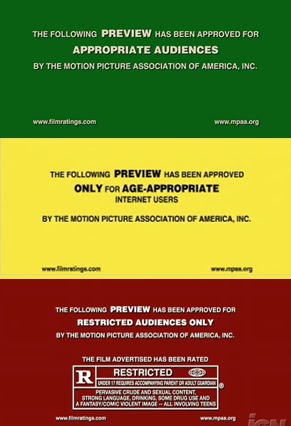
America have recently rethought the general green label for trailers, to show that they have been approved by the ‘Motion Picture Association’ and have introduced a red, possibly to be followed by a yellow, label to indicate that an internet trailer is “approved only for age-appropriate Internet users”. This is a way of identifying content that may be offensive such as violence, sex, language or trailer intensity.

Wednesday, November 30, 2011

Our Lists and Planning: Teaser Opening Montage


These were our initial montage ideas -greatly inspired by the opening sequence of 'Gattaca'. Although we did not use all of these ideas, it was important to us that we built up a basis and ambiance for the montage. The main message we wanted to convey was the closure of media outlets and government intervention

To begin editing we required audio which would create a structure to the montage and hopefully set up the landscape of the social stage within our narrative. 
Our first base for research was YouTube where we searched a variety of key words eg. 'Freedom of speech', 'war', 'media impact', 'social networking debate','riots', 'terrorism', 'protests' and 'patriotism' to build a picture of the scenario within our narrative.
Below are our initial transcripts and links to the videos we took them from. Our manipulation of the resources online highlights the ease with which audio and images can be taken out of context and made to represent or symbolise something very different. This gives the media a great deal of power and creates, to a certain extent, fear, which is something we found during the casting of our Prime Minister figure.

Initial Montage Audio Transcript:

-          ‘An extraordinary moment in British journalism’
-          ‘The end of the News of the World’
-          ‘failure to start a reinvestigation into phone hacking two years ago’
-          ‘much tighter laws on media ownership’
-          ‘is closing down newspapers’
-          ‘those responsible being brought to justice’
-          ‘This Sunday’s edition will be the last’
-          ‘should you be celebrating tonight or lamenting today’s events’
-          ‘the damage could go beyond financial concerns’
-          ‘Thank you and Goodbye’
-          ‘Goodbye and stay well’

-          ‘undermining the judiciary’ (1:27)
-          ‘the very foundations of western society’ (1:37)
-          ‘journalists who corrupt the language to suppress the truth’ (2:27)
-          ‘defending the indefensible’ (3:07)
-          ‘they’re anti-freedom, anti-free thought, anti-free speech’
-          ‘this is just the beginning’ (4:57)
-          ‘a crime against humanity’ (5:57)
-          ‘poisoning the whole world’ (6:05)

-          ‘complete resolution, to defeat this terrorism’ (1:24)
-          ‘our determination to defend our values and our way of life is greater then their determination’ (2:23)
-          ‘they will never succeed’ (2:50)

-          ‘the day the war started’ (0:18)
-          ‘the role social media can play in propagating news’ (0:33)
-          ‘influencing everybody else’ (3:20)

-          ‘extremist groups’ (1:23)
-          ‘fabricating information’ (3:14)


Tuesday, November 22, 2011

'1984' Trailer Deconstruction

Hooks of this 1984 film trailer for ‘1984':
- the integrity of the novel which, published in 1949, had long since been regarded a classic or as the trailer states “the biggest selling futuristic novel of our time”, with a previous 1954 TV film adaptation to its name. - The trailer begins with a black and white photo of the famous author, George Orwell. “In 1984 this man had a vision…” the voiceover begins, which will last throughout the 2minute 39 trailer.
- Orwell’s image creates credibility and gravitas for the film, the implication is that this film has stuck closely to the book and if someone liked the book they should be interested in the film. - Big stars, “a cast to match its stature”, also act as a major attraction and the actors playing the four major characters of the narrative are introduced individually and their names are then recapped at the end as well.
- Today concepts like ‘Big Brother’ and ‘Room 101’ are almost as iconic as the novel itself.
Voiceover: 
-  sets up the complex narrative and is heard throughout.
- phrases such as “A haunting and terrifying vision of what the world might become before the end of the twentieth century…” which highlights that for Orwell this novel was a futuristic narrative of a dystopian society “in the grip of fear”, “conformity”, “continuous surveillance” and “ceaseless war”.
- emphasises the shocking and frightening world of the film
- links the disjointed images, which show visuals of what the voiceover comments on. - introduces the main characters

Characters:
                        Winston Smith “solitary rebel against a merciless state, a classic hero” = familiarity with the characters
          = Winston gains audience sympathy
          = intrigue with their roles
          = his dialogue introduces the theme  of ‘truth’ in the film
                    
                     Julia “whose love for Winston transforms his secret dreams into vivid dangerous reality…”
           = love interest - affection between them,            
           = the provocateur of the relationship and the catalyst for the events of the novel
           = importance
           = contrast with the “hatred” of the society
           = their doomed existence/relationship, always under threat

 Transitions:
Fades - creating a sinister slowness to the opening of the trailer 
- cut-to-black edits or straight cut edits are used to increase the pace.


Motif of eyes throughout the trailer:
- constantly being watched creates a chilling ambiance on screen but also would make the audience also feel nervous and on edge.
- Big Brother’s face on the telescreen is a repeated image (also the final image of the trailer)
- he appears to be staring out, not just at the characters within the film world but also, at the audience.

Music:
contrapuntal music - which is slow to begin with like a ballroom dance, orchestral sound, played at a low pitch, makes the images seem more disturbing.
- The corruption of the ‘future’ government is connoted to, “language and history are being systematically destroyed” by them to solidify their position in absolute power.

Genre:
Sci-Fi - images of poverty, conformity and oppression, through fear and violence, aims to shock the audience by highlighting the horror of this ‘possible’ future.
- Large crowd scenes of generic people, dirty and thin, emphasises the low quality of life and the power of Big Brother over them is that they cannot show passion, only “hatred”.


‘Thriller’secrets or hidden inner thoughts,
- the threat of torture and Room 101 and
- the ideas of rebellion against the corrupt
- ominous and tense atmosphere created.

- Quick shots of Winston in confinement or hiding in the dark from authorities all allude to mysteries and illegality of his actions, the audience is, by being placed next to Winston as the protagonist, rooting for him to succeed against the odds.
- Anticipation and excitement, as well as nervousness, are created through this desire.
- Enigma’s and mystery 
- very little narrative content is revealed 
- if any key moments are shown the deep, often confusing, and philosophical content of the film still leaves a large amount of questions at the end,
- enticing the audience to view the film.
- eg. "Room 101 is the worst thing in the world.” = complicated puzzles are integral to the appeal and suspense of the plot.

Romance 
- Human relationships are the central interest  of any narrative 
- the love between Julia and Winston is juxtaposed with the rest of the society and
- creates hope for the audience.

 
‘Action’
-highlights the destructive nature of the government in power and the dangers of the society,
constant war eg. Explosions and fire create tension and fear.
In one shot the protagonist, Winston, is shown to be thrown over by the force of a nearby explosion.
- Close up images, where the fire is in the fore-front of the screen and use of increased volume  are contrasted with the stillness of the rest of the trailer and the dramatic edits to black create mystery, and fear for the lives of the characters.
Title:
- repeated twice in the trailer for memorability
- highlights its significance. 
- The titular year was the year of release of the film (some scenes were even shot on the days noted in Winston’s diary in the book!).
- “The Film of the Book of the Year” uses a dual meaning of ‘of the year’ which is a term usually associated with awards or praise but also alluding to the film’s “perfect timing”.

Anchorage:
red, bold and angular typography with black outline
- creates the idea of a rigid structure and conformity which is apparent in the society of the film,
- red as the signifier of danger.
- The title either  fades in or zooms in, synchronous with an increase in music volume, for dramatic effect, filling the screen over an image of the dilapidated and grey world of the film in that year.