.

Monday, October 10, 2011

Symbols Research


Symbols through time
Swastika
The swastika is a prime example of a symbol that has changed through time. Generally it is associated with the Nazi Party of Germany in the 1920s, '30s and '40s. It has become a symbol that has been largely stigmatised. Many post-Nazism groups have used and still use this symbol as an indication of their far-right wing agendas.


The swastika has been a religious symbol of peace for centuries in religions such as Hinduism.


The Nazi Party, under the leadership of Adolf Hitler, adopted the swastika as its party symbol in 1920. It became a part of the state flag when the Nazis came to power in the early 1930s.


The Russian far-right wing political party, the Russian National Unity, modified the swastika as a symbol of their party.


The far-right wing South African political party, Afrikaner Weerstandsbeweging, have also adopted their own version of the swastika, evidently inspired by the version used by the Nazi Party.

Anarchy and conflict
There are many different symbols that have become iconic in identifying a cause in conflicts and in civil events.


Although members of anarchist movements have largely denied the importance of symbols in political movements, they have adopted certain symbols to represent their cause. The circle-A symbol, along with the black flag and others, is a traditional symbol of the anarchist movement.


The clenched fist is an iconic symbol of resistance or rebellion. It has been used by many groups and causes to represent opposition to governments or events. Its general use was originally a symbol of the broader workers' movement. Famous examples where it has been used are in the Spanish Civil War, by the parties of the Comintern, by black power groups such as Black Panthers and at the 1968 Olympic medal ceremonies where two black American athletes, Smith and Carlos, raised their black gloved fists in the air to represent black power (although in his autobiography Smith says that it was not a black power salute, but a human rights salute). A black fist usually indicates black nationalism, or socialism, while a white fist usually indicates white nationalism.

Religion
There are many symbols that have become icons of religion and usually have a particular history to define their place in their religions.


Perhaps the most famous religious symbol is the sacred cross. It is used in Christianity as a symbol of the crucifixion of Christ.


The Star of David is another famous religious symbol, used to represent Judaism. It has become ingrained in history through its links to Jewish discrimination and anti-Semitism, mainly in Germany in the early to mid 20th century and the Holocaust.

National Emblems
National emblems have always been an important factor in recognising different nationalities and cultures. Many national emblems are embedded in history as signifying a particularly era of a nation.


The hammer and sickle became an important symbol of communism and the Soviet Union (USSR). It is largely attributed to the rule of communist Russia, but represented all of the surrounding satellite nations of the Soviet Union. The hammer and sickle was also the emblem used on the Soviet state flag.


The Union Jack has been the flag of the United Kingdom since 1801 and is one of the world's most recognisable national flags, also being included in other national flags, such as that of Australia. It dates back to the Union of Great Britain and Ireland and consists of the three crosses of St. George, St. Andrew and St. Patrick.


The national flag of the USA is another instantly recognisable flag. The fifty stars on the flag represent the 50 states and the 13 stripes represent the thirteen colonies that rebelled against the British monarchy and became the first states in the Union.

Iconic People
There are many posters, photos and pictures that have become iconic symbols of a cause.


The image of Ché Guevara (usually set upon a backdrop of red) has become an iconic image, not just associated with the Cuban Revolution, but as a symbol of resistance and rebellion across the world. It has become one of the most famous images of all time.


Martin Luther King Jr. became the face of the Civil Rights Movement in the USA during the 1960s. His “I Have A Dream” speech and the March on Washington have become famous and incredibly important parts of American history.


The British First World War recruitment poster, featuring Field Marshall and Lord Kitchener, (image left) is one of the most famous, and parodied, posters of all time. At the time, Lord Kitchener was Secretary of State for War.
The similar poster of “Uncle Sam” (image right) was used as a recruitment poster in the USA during the First World War.

Tinker Tailor Soldier Spy Film Deconstruction


Tinker Tailor Soldier Spy is a thriller/drama film which came out this month! We went to the cinema to see how the film applied itself to it’s genre and to research the presentation of the characters. Warning – Contains spoilers!

Summary: There is a Soviet agent working in MI6, and George Smiley (Gary Oldman) is brought out of retirement to find him. The film is set during the Cold War.
The film presented intelligence warfare and juxtaposed to it’s context: the violence of the Cold War. It is a motion picture adaptation of a novel, which is rumoured to be based on true events as it’s author John le Carré worked for both MI5 and MI6.
The tone of the film was thoroughly sombre, serene and slow. The pace meant that violent scenes were more shocking  as characters were forced to break out of composed roles. The complicated plot meant that the audience were forced to work it out at the same time as Smiley. Extended silence was used to create tension and the naturalistic action made it clear that it was a British drama. The lack of action sequences was made up in the focused violence and purposefully morbid gore.
The film also used a combination of shots we appreciated would work well to mirror in our trailer. We noticed that the shots were often over the shoulder during dialogue, and that this meant that the audience had to imagine the character’s emotions. Whenever the suspects were presented in a series of quick paced shots, Bill Haydon (Colin Firth) was always first. He was the double agent, and therefore the audience was given clues throughout the film. Most of the film was flashbacks, and these sequences were slightly more hazy than the present shots and depth of field was interestingly never used. Another memorable shot was that of Peter Guillam appearing as a lift door opens behind Toby Esterhase waits unaware. We enjoyed how ominous this shot was, and how it gave a slightly comical edge to the sequence. During the film the character Control was always presented at the head of a desk. At the end, he was replaced by Smiley. This epitomised how Smiley was now in control, and was extremely effective. 

The thriller/drama genres were met by the following criteria:
  •          We follow a central protagonist as he works out an enigma
  •      The film is based around the British Intelligence
  •     Tension is created
  •         Truth, betrayal and mystery were central themes
  •     There was a psychological aspect to the narrative
  •      The characters were all flawed and these flaws effected the plot
Semiotics were used throughout the film:
  • The files that travelled up and down the floors of the building represented the selling and trading of secrets
  • Communist symbol was used to reflect the historical context
  •    Pictures of the suspects were attached to chess pieces to represent the manipulation of the Soviet government within the British Intelligence. It suggests that spying is a game and spies and people can all be controlled.
  • Smiley’s glasses changed in the present and past which could represent how people always see things differently at the time
The protagonist George Smiley was presented as cool, calm and collected throughout the narrative. He wore period dress which was discrete, dark and non-descript. His glasses were different in the present and in the past which made it easier for the audience to distinguish between the two. The antagonist of the film was more the enigma he had to solve and the obstacles in his way. Bill Haydon was a sympathic antihero in the way that the audience could understand how he lost faith the west.


The title of the film ‘Tinker Tailor Soldier Spy’ is presented in the trailer like this. The idea is based around unwrapping an enigma. The title itself is intertextual as it refers to the child’s nursery rhyme which describes the occupation of various men. This rhyme is referenced in the film as all of the suspects are named after one of these titles. 

We believe that the main message of the film was to enhance the paranoia of the Cold War and that the film was based around the idea of disillusionment.

Tinker Tailor Soldier Spy - Web Page Deconstruction


The Tinker Tailor Soldier Spy web page is built entirely around the idea of the folder elevator featured in the film.   The elevator moving up and down the floors symbolises the trading of secrets within British intelligence. There are six floors, the top level with George Smiley sitting at the desk, the offices, the audio surveillance room, photography archives, research and the basement. All of these floors are real locations within the film, and their use builds on the genre of the film as it is all about surveillance and spying

The title and the release date are static throughout all the floors, and stand out due to their white and red colour, opposed to the darkness of the background. As with many films of this genre, the main colours are white, red and black. The images are made up of mise en scene typical of the 1950s, including old technology such as a slide projector, typewriters and rotary dial phones. These are mostly interactive within the site, and animations play alongside sounds when the user's mouse hover over them.  The scrolling bar within the user's internet software controls the movement of the lift, which is their viewpoint.

Other content is found at the top of the site, where a navigation bar appears if the mouse hovers over it. There are biographies and a synopsis, stills, interviews, downloads, video and the 'guide to the circus', a downloadable guide to the movie. It is notable the type of language the site uses, 'stills' instead of photos for example, which denotes the time era. As with many web pages, you can view the trailers and behind the scenes videos. There is also a link to their Facebook and Twitter pages, and a link to a booking site for film viewings. 

Access it at the official webpage

Friday, October 7, 2011

'Gattaca' Costume and Type-casting

Costume:

In the beginning Vincent is seen in casual clothing, slightly scruffy but that never the less mark him out as studious, possibly even geeky as his physically weaker stature also conforms with this stereotype. Once he leaves the relative comfort and safety of his home Vincent loses even this stereotype and identity becoming merely a generic worker, wearing a grey and black jumpsuit, in the eyes of society. His glasses are symbolic of his perceived invalidity. After Vincent takes on Jerome’s identity he dresses in dark colours, usually black, and styled suits, with hair slicked back, in order to present himself as one of Gattaca’s elite. His physical transformation highlights the superficial prejudice of society and highlights that underneath the genes everyone has the same potential. His smart, crisp uniform despite the futuristic diegesis of the narrative is surprisingly traditional and similar to dress clothes today. However the regularity that he wears this smart attire is surprising.
Type Casting: Jerome, Vincent and Anton all have brown hair which is slicked back (except when Vincent isn’t in his role as a ‘borrowed ladder’). This conformity in the casting is to show the reduced individuality of the characters and to allow the audience to see the possibility of their interchangeable identities. Their chiselled features, without facial hair, impress the society’s desire for perfection and to highlight the attractiveness of the actors is also a hook for a female audience. 
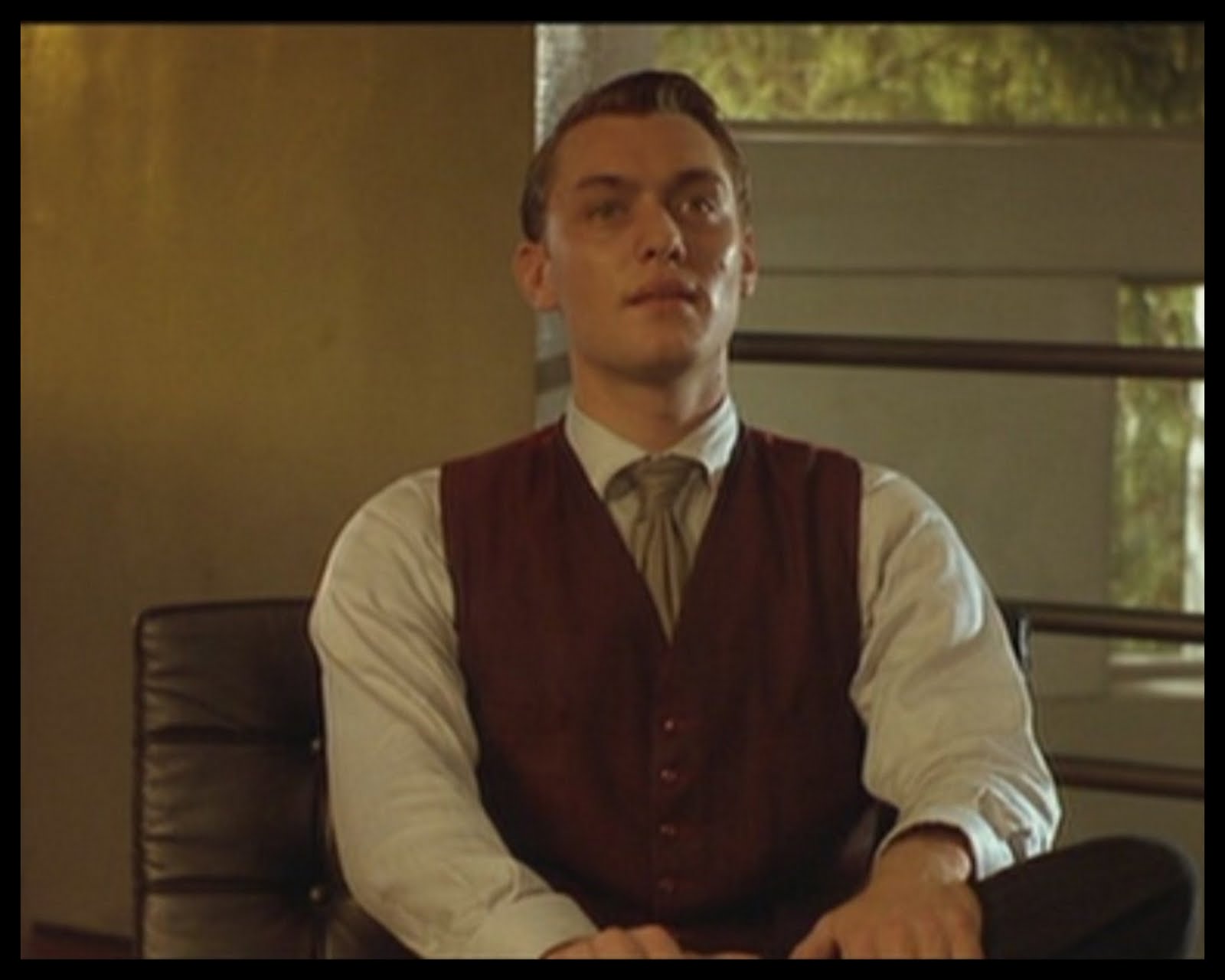
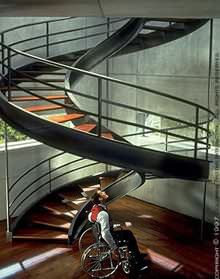
Jerome is wheelchair-bound after an ‘accident’ and this is silver and black with no additions to it. Jerome was born as one of the elite and assumes a position of superiority and authority. His dress code matches these feeling as he is always well turned out in a suit styled outfit, shirt, tie and waistcoat with dark trousers and shiny shoes. Although, like the other characters, he is often in darker clothes (particularly dependent on his mood) he is the only character to be seen wearing a bright colour. Whether this is ironic as he is one of the most depressed characters of the film is unknown.

Irene wears the same formal styling of outfit as Vincent. It is black and white and decent, although she wears it with sophistication and its tailoring affords to show her figure highlighting her desirability. Most of her clothes have an air of formality even her all black athletics clothing and elegant black dinner dress. Her gold dress is the first time she breaks free of some unspoken formal clothing code and by having her hair down the idea that she is breaking with normality is accentuated. The richness of the colour gold is often symbolic of something precious and Irene’s role as a love interest would align her with that idea. 
Type Casting: Blonde hair is often associated either with beauty, being angelic or with stupidity. In this film Irene’s blonde hair and blue eyes could be a nod to the Nazi view of the perfection of the Aryan race in order to align the oppressive government with this infamous political party so that the audience will subconsciously understand the threat that this antagonist poses within the film. Uma Thurman also has an angular face and is often considered an interesting beauty. Her model-like looks would show the audience from the beginning that she too was a designer baby – made to be the best in every way.

'Gattaca'

‘Gattaca’ is a dystopian future Sci-Fi which has honed in on the contemporary issue of ‘designer babies’ and the modern obsession with altering our genes, and projected the concept into an oppressive, extreme environment for contemplation of the morality of these investigations. Potential children are selected through pre-implantation genetic diagnosis to ensure they possess the best hereditary traits of their parents. These children are considered ‘Valid’, whereas naturally conceived children, ‘God children’ are ‘In-Valid’ thereby a genetic hierarchy is created. ‘In-Valids' are considered to be educationally dysfunctional, aggressive and susceptible to disease giving them a shorter predicted life. The politically correct government has made genetic discrimination illegal but practice is not punished and the ‘In-Valids’ are relegated to menial jobs.
The Title: Refers to the astronomical society, like NASA, in charge of exploration trips into space and analysis of the Universe. However, the name of the film is created to imply a core theme of the narrative: DNA. The letters G, A, T, C, the base letters of the title, are the initial letters of the four complementary nitrogenous bases on DNA. This highlights the film’s (and the character’s) focus and interest in this scientific level of being human.
Tagline: The inspirational tagline “There is no gene for the human spirit” refers to the protagonist as he strives t rid himself of the restrictions of being an ‘In-Valid’. This play on words is to highlight that in this imagined society differences are considered disabilities (‘invalid’). The films main aim, then, is to convey that there are intangible parts of our being and existence that science cannot explain or dictate.
Characters:

The protagonist Vincent Freeman (Ethan Hawke)is followed from the moment of his conception and introduces himself and his inner-most thoughts via a voice over. His surname proves to be ironic, as he is far from free –trapped inside his own genetic information. He is, on the whole, discriminated against for being imperfect. His tenacity and courage drive the narrative as he single-mindedly pursues his dream – of becoming an astronaut.

 Irene Cassini (Uma Thurman) is the love interest of the film yet also serves as a character to represent the middle ground. She was designed to be perfect and yet she was not. She is a mistake in the science, allowed to work at Gattaca but not allowed to progress into space. She acts as a reflection of Vincent’s views on society (there is a scenario which is repeated but reversed between them and they both make the same choice).

Jerome Eugene Morrow (Jude Law) is almost a mentor character but doesn't fully fulfil the stereotype, instead he and Vincent give each other what they both want (Vincent –Jerome’s perfect identity/ Jerome – Vincent’s dreams). Jerome is a tragic hero, another victim of society. He suffers from the burden of perfection; because of it he should have been the best but was crushed by only achieving a silver medal at swimming.  He is battling internal problems which are symptoms of the wider social issue.
The antagonist is the society and its demand for perfection and its prejudice against those who are not. Anton Freeman (Loren Dean), Vincent’s estranged and genetically superior brother represents this and voices the antagonist’s side of the argument. This highlights how indoctrinated the characters are to view difference as negative.  However, it is also a crucial point that by the end the brothers look very similar implying that rather than being conflicting forces they are two sides of a coin. Vincent is physically defective but is determined and spirited. Anton is physical perfection but lacks the conviction and drive of his brother. The motif of their swimming game of chicken pits these qualities against each other and eventually victory is that of “the human spirit”.

'Gattaca' Key Shots

[4] The fingerprinting method of certifying someone’s identity is used as the only form of interview for the aspirational/elite jobs and also as a security system to allow a person access inside Gattaca. This highlights the use of technologies as methods of control, tracking and dividing the citizens.
Generic lines of workers from a high angle create an imposing sense of being watched and again reduced an individuality of the people. 
Identification frequently appears throughout the film (often wavering after Vincent’s test to increase the tension). The words VALID/INVALID are bigger than even the person’s name. This shows a loss of identity beyond that of the characters genes. It also highlights an undercurrent of judgement by the higher powers, whether someone properly belongs to the society or not.
[3] There are lots of close ups of the protagonists face throughout the film allowing the audience a secret insight into his thoughts and feeling that are not disclosed through dialogue or voiceover. Often the protagonist’s tension or fear of discovery heightens the audience’s similar emotions. The close ups allow increased empathy on the part of the viewer.

'Blade Runner' Key Shots

What is most interesting about the title was that it appears over a dramatic shot which then fades away leaving just the title on a black screen in order for it to stand out.
The use of a striking close up, half in light, half in darkness is displayed here and has many symbolic connotations, particularly for complex characters. Roy’s character veers between evil acts and, if not good then, sympathetic intentions and motivations.
This image is of one of the replicants punching through metal in a moment of fury and violence. The container releases a large plume of smoke, under the cover of which the character escapes. The banging of his hands is synchronous with a raise in tempo and volume of the music giving the moment tremendous power.
This shot was particularly interesting. The protagonist jumps down and lands  running towards the camera, pulling up short and for a moment the audience is allowed a clear view of his facial expression during a sequence that had been fast paced music. In the trailer this shot cuts to black and silence so the audience’s thoughts linger on this image.